Thursday, September 22, 2005
Wohin Deutschland?

Sunday, September 18, 2005
Reflection
Not a day goes by that I don’t feel this summer’s experience affecting me and the way I perceive my surroundings. At first, I was certain that the small superficial things I was noticing were a part of reverse culture shock (the flags raised everywhere, fried foods, southern accents), but as time goes by I have begun to realize the extent to which this summer’s trip has changed my perspective, and in may ways, my life.
I will never forget the moment when I first felt completely secure and confident in my desire to be a doctor. I was peering over the shoulder of that German heart surgeon in Bonn when suddenly it all became clear in my mind! The patient’s chest was gaping open on the table, his heart pumping right before my eyes, and I was fascinated by the technical aspect of it all. But for the first time in my life, I was finally able to observe medicine as something that I one day hope to be a part of- that is, a most elaborate combination of trust, determination, skill, and cooperation.
As a student, it was particularly inspiring to meet and discuss important world issues with other students who are professionally motivated. Academically, this trip to Germany opened my eyes to a world of education taking place outside the conventional classroom. I was able to learn a great deal about some of the more specific cultural differences between Germany and America, and after having had those personal experiences, I intend to approach any cultural difference I encounter in the future with respect for different perspectives and an open mind, and to encourage others to do so as well. This summer I was most impressed by the Germans as a multilingual society, and having experienced the difficulty of living in a country without speaking the language, I now have a much greater appreciation for language and its power. Indeed, my time abroad has encouraged me to work towards becoming fluent in at least two non-English languages. Also, I couldn’t help but notice and appreciate the Germans’ collective concern for the environment; set against this new backdrop, U.S. policy and many of our daily standards seem shamefully wasteful and destructive.
In addition to boosting my professional and academic confidence, my time in Germany taught me to seek out new experiences, and to view them as exciting challenges rather than as something to be feared. Before this summer, I had never used any public transportation system other than the Texas A&M University bus system. Having successfully navigated the metro system of Paris and the tram and train systems throughout Germany, I now have greater confidence in my ability to adapt to my surroundings, even when faced with technical or language barriers.
Studying the history of Nazi Germany and the Holocaust was an extremely moving experience for me. One can read volumes on the atrocities committed, but the horrific reality of walking through Dachau’s gas chamber and the opportunity to talk with Germans of my generation about the collective guilt that continues to affect their society were unforgettable experiences for me. As a pre-medical student, our study of the Nuremberg doctors’ trial and medical crimes committed during the Holocaust has emphasized to me the importance of an international code of medical ethics. More than anything, the historical perspective I gained from the Germany Vet Med Trip has taught me to carefully question authority and to approach global politics with a more critical eye.
Can't tell the players without a scorecard!

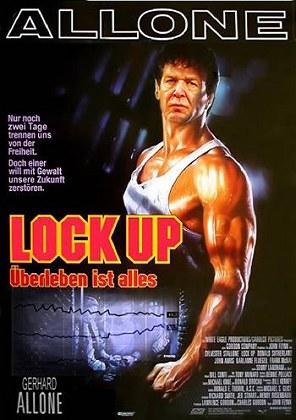
Today is the day! All of Germany (with the exception of Dresden—see my earlier post, “Death of a Neo-Nazi”) is heading to the polls. The Wahlkampf is over and in a few hours we may know whether Gerhard Schröder and the SPD have pulled off an incredible come-from-behind-victory to stay in power, or whether (as predicted) the CDU/CSU will win and Angela Merkel will become Germany’s first ever woman Chancellor.
Expectations are for a very large voter turnout, which may help the chances of the SPD. Schröder’s masterful campaigning has helped his party narrow the seemingly insurmountable gap that all of the polls have shown between the SPD and CDU since the Chancellor called for a snap election after the disastrous SPD loss in the state election of North-Rhine Westphalia in June (see my earlier post).
However, this is the Federal Republic of Germany we’re talking about here, and things political are complicated and colorful. All of the polls indicate that, as is typical in Germany, whoever wins will have to govern along with a smaller, coalition partner. Political parties in Germany are color-coded! The CDU/CSU’s (black) preferred partner is the pro-business Free Democratic Party (FDP; yellow) so a “schwarz-gelb” coalition is what Merkel is hoping for. The SPD (red) prefers to govern with the Greens (well naturally, green) so a Schröder victory could mean a continuation of the current “rot-grün” coalition. Thanks to the defection of former SPD stalwart, Oscar LaFontaine, to the new Left Party (die Linke.PDS) there are now two “red” parties, so in theory one could see a “rot-rot-grün” government although both Schröder and die Linke leaders, Lafontaine and former PDS chief, Gregor Gysi say nein, niemals!
Or how about a grand coalition, “schwarz-rot” with the CDU and SPD working together? Also a big “keine Chance” from both Schröder and Merkel. Finally, there has even been chatter about a possible “Ampel Coalition”, a “traffic-light” government composed of the CDU, the SPD, an die Grüne, so “red-yellow-green”. Also unlikely say the analysts.
Not complex enough for you? In Germany, every eligible voter gets two votes! The Erststimme (first voice) is your vote for the Bundestag candidate of your local constituency and the Zweitstimme (second voice) is for the national list of candidates (that is to say the party you wish to see running the show). This summer, die Grüne plastered political posters up all over the country with the slogan “die Zweitstimme”, urging voters to use their second vote to increase the representation and hence political power of die Grüne/Bundnis 90 (the full designation of the Greens these days!).
Well you can’t tell the players without a scorecard, so here are some pictures of the candidates and other major players in today’s Bundestagswahl. You (assuming you are a German, 18 years of age or older and otherwise eligible) are now ready to get out there and wählt!


Monday, September 12, 2005
Looking Back
This trip was my first major trip abroad—I’d been to Mexico and Canada but to me, they really don’t count. This was the first time I had to be a big girl and get across the world all by myself. With everything that has happened with my family in the last couple of years, I think I was using this trip to get away from them and from everything else and looking back I know that’s why I wasn’t really homesick for anyone. I was looking forward to having some life changing experience (I just didn’t know what yet).
Academically speaking, my perspective has changed in several ways. I know that our health care system is flawed in numerous ways but after speaking with Dr. Penner I don’t think I’d like to be a patient in a German hospital. Yes, the doctors and nurses are extremely well trained but what the patient wants doesn’t seem to be a top priority with everyone else. I am so glad I didn’t have to go see a doctor while I was there. I can be very stubborn when it comes to my health and I don’t like people telling me what to do (I like to tell them what to do) but the first week I was back in the states I was still sick. I finally gave in and just went to the doctor. Also, there was a time when I wanted to be a vet, but that changed after I realized that I’d have to work with other animals besides dogs and I really don’t like other animals besides dogs and so that aspiration went away very quickly. But I really enjoyed the vet school at Hannover. The lady veterinarian that showed us around was so nice and knowagable and seemed to loved her job so much and the cows really liked her back. It made me want to be a cow vet. Overall, it was interesting to compare our two systems.
One part of the trip that affected me the most was the German history. Before we went I thought I knew I a lot about WWII (and I still do), but I defiantly didn’t think about it in the same way as the Germans do. I wasn’t taught in school to blame the German people for WWII. We were taught that it was all Hitler’s fault. But there is still this cloud that hangs over Germany and I find it tragic. The people are just so afraid that another Nazi Germany will arise that they won’t let go of the past. My host father, who is in his mid-30, says he even carries around a sense of guilt. It’s something that I don’t think I can ever understand but that I am definitely more mindful of. It’s made me more aware of my country and my countries actions and how I really feel and how I will feel in 20 years from now. Also, as several people have said, you can read about all of these places in text books and Dr. Wasser can tell us about them, but there is nothing like visiting Dachau or the Nazi rallying grounds for yourself. History is amazing.
This trip has made me comfortable with, I don’t know how to put it, but everything I guess. I tend to get road rage when I drive, and now I don’t. If I would normally get lost I would freak out. Although I do still have my time issues and like to be early, I’m not as early as I used to be. In Europe, everything was just more laid back. I got lost, several times in fact, and I just had to figure out what to do next. We missed a train on the way back from Heidelberg and we had a 1 minute to catch the next one, but we figured it out. We had to buy train tickets from people who spoke little or no English and we spoke no German. We had to navigate our way through horrible metro systems but we did it. Okay, so maybe those last two I kind of let other people do for me… ;). But the point is, we were in a country were we could not speak the language and we managed to get ourselves around just fine. It was like a big game: “Who Can Make It Back to The U.S. In One Piece.” And I think we’ve all won.
Thank you Dr. Wasser for a wonderful experience with great host families, great field trips, and great food. Thank you everyone else for helping me up mountains, getting me on the right train (or metro, or bus), sharing hotel bathrooms with me, eating granola bars, letting me talk to monkeys, and dancing in cages!
Sunday, September 11, 2005
Final Thoughts
Since I had never been out of the country prior to this trip I can say almost everything I did while in Germany was a new experience. Before leaving I was so worried about everything from would I be able to make it through the airport to getting food poising. Luckily I can now say that I have successfully navigated through many airports and I did not get food poisoning. I think though I have learned more on this trip than I have in any other college class that I have taken thus far in my career.
Dr. Wasser’s presentations were very interesting about the histories of medicine and veterinary medicine, but what I think I learned the most academic information from was going to the various museums and historical sights. You can learn history from books and from class but it is so much more meaningful to actually go to the places where this history occurred. This was especially evident to me when we went to Nuremberg. In school we mostly learn about the Holocaust and Auschwitz and looking at just this you think how can people be stupid enough to follow Hitler? Going to all of the museums, Dachau, and the Documentation Center you understand some of the situations and history that led to Hitler’s coming to power, which I think is more meaningful than just learning about the Holocaust because now we know what to look for so that this doesn’t happen again.
It was also very interesting to me that German culture could be so different in many respects, but at the same time many things were the same. Normally I am a very punctual organized person, who follows all traffic laws and such so in that aspect I got along with the German people well. They were a lot more liberal in their views on social issue then I thought they would be, for instance it seemed like everyone above the age of thirty there was divorced and this was totally acceptable where as in the US this carries such a social stigma. Frau Pilartz’s classes were interesting too hearing her opinion on Americans and Germans. I did make one big improvement though in my general way of thinking by giving up my idea that the American way is always the best way of doing things.
Since I am hopefully going to medical school next year I tried to learn as much as possible about the differences and similarities between German and American healthcare systems. It was especially interesting hearing all of the drug names and procedures in German. The doctor that worked in the cardiac surgery recovery area was especially kind to his patients. Like he would talk to them and put his hand on their arms even though they were totally drugged. Dr. Penwar’s talk on healthcare was also very interesting and it got me thinking more about the problems that we have in the US and that we are not unique in having such problems.
At the end of the trip I was very ready to go home because traveling for almost two weeks with thirteen people was very tiring, but now I always bring up Germany and I really appreciate all of the experiences that I had there. I still use German words in my Spanish class and I would kill of a good donner right now and I don't think I will ever forget this trip and the things that I learned from going.
Saturday, September 10, 2005
Death of a Neo-Nazi
There has been virtually no coverage of the upcoming Bundestagswahl in Germany by any of the American media. The general election is next weekend (September 18) and there are, I believe, at least two reasons why we here in the USA are hearing and reading gar nichts about it. The wall-to-wall coverage of Hurricane Katrina and its aftermath and the destruction of New Orleans have displaced almost everything else from radio and TV newscasts. This comes as no surprise and it is, after all, a huge story with both a massive human interest element and a considerable political one as well. The second reason I suspect is the generalized lack of interest in this country in “national” news from any other country. To be fair, we (the USA) are the sole remaining superpower and still the most potent global economic force on the planet, so what goes on internally here is of import and interest to the citizens of the rest of the world. But it is also true, in my opinion, that the overall interest in events taking place outside our borders that does not directly involve Americans (e.g. Iraq) is diminished here by a generalized American inward-lookingness and provincialism.
I wanted to bring to the attention of the Blog an amazing development in the Wahlkampf between Gerhard Schröder’s SPD and rival Angela Merkel’s CDU/CSU. Pretty much from the get-go when Schröder deliberately lost a vote of no-confidence in the Bundestag and called for early elections, the conservative CDU/CSU alliance looked like a sure bet to win. They are still ahead in the polls with only eight days left in the campaign but their lead is dwindling somewhat and Schröder, in an interview with the Süddeutsche Zeitung, sounded confident that he could yet pull off a come-from-behind victory. Then, last week, a miracle occurred!
Kerstin Lorenz, running for a seat in the Bundestag, keeled over dead in the middle of a campaign speech from a stroke. Frau Lorenz, 47 years old at the time of her death, was an extreme right-wing candidate of the NPD from the eastern German city of Dresden. Now, while it is true that the German Verfassungsgericht (equivalent of the Supreme Court) has ruled that the NPD is, in fact, not technically a neo-Nazi party, and is therefore legal under post-1945 German law, the position of the NPD on issues such as immigration and asylum, or the use of tax dollars to reconstruct synagogues in Germany, places them far enough to the right of the political spectrum that the Germans I have discussed this with, agree with me that these folks are, de facto Nazis. The NPD has won some seats in at the state governmental level in the eastern Land of Saxony but does not have any representation in the Bundestag nor does it appear likely to be getting any time soon. Candidate Lorenz had no chance of winning a seat, but her death may determine who the next Bundeskanzler will be!
Under German election law, all of the ballots in Dresden have to be reprinted. This is going to result in a delay in the polling there in the federal election until October 2. The rest of the country will still vote on September 18. German law also requires that the results of the voting on September 18 be announced as soon as the results are in an official. Thus, the 290,000 or so voters in Dresden will know who is in the lead for the Chancellor’s seat and by how much before they have to cast their votes! In theory, at least, if the election is close enough (and it appears that it might yet be that close), the voters of Dresden can swing the election one way or the other and pick the next Chancellor and ruling party.
Last night’s newscast on LinkTV from Deutsche Welle included some on the street interviews with Germans about this development and there is considerable consternation and upsettedness. CDU (and their alliance partner, the FDP) politicos were screaming mad, fearful that the Dresdeners could throw the election to Schröder and the SPD, but the law is apparently quite clear. Ordnung muss sein in spite of this disorderly development. In more ways than one then Paul Célan was right, “Der Tod ist ein Meister aus Deutschland”—“Death is a master from Germany”.
Tuesday, September 06, 2005
Reflections...
Today was the first day since we have returned from Germany that I actually missed Germany... as confusing as that sounds! Sitting in Biochem today with Kristen, our professor was lecturing about Zwitterions (I'm sure you all can relate). After explaining that it was a German scientist that the ion was named after, he began to count in German. Kristen and I began to count along, without realizing it. It amzed us that it came so naturally, and it brought back so many funny memories from our German lessons. Later on, I ran into Lindsey... it made me realize how much I miss all of the people from the trip. We hugged and caught up in the thirty seconds that we had. It made me sad to think that we might never hang out as a group again... or use our German!
So, sitting here at the SCC, I have been reflecting on how I have changed since I've come back from Germany. My family and friends say that I am more mature and confident. My boyfriend says that I am much more independent, and that I handle stress in a more positive way. Sometimes, I don't feel that these changes have taken place, as I dash around frantically trying to get to class, visit friends, attempt to study, and attend organizational meetings... but then again, I don't get bogged down in things that used to stress me out. Now, I realize that you can function all day long on just 5 hours of sleep WITHOUT a nap the next day. I can now sleep ANYWHERE! Children here are now adorable to me, after experiencing German children.
Being back in Texas has also made me thankful for a lot of things I took for granted before going to Germany. One of the most important things was spending time with your loved ones. You don't realize how much you care about someone until you leave them for six weeks. Before, I took the time I spent with my family, friends, and Braden for granted... now I cherish every moment I get to spend with them. Another aspect that I'm now thankful that we have in Texas is our cars! I LOVE being able to get around College Station without having to rely on buses and trains. Although I highly promote public transportation for pollution reasons, I love my SUV. I'm a sad case...
Germany taught me a lot of things that I will never forget, and can't even begin to explain. I tell everyone I know that they should study abroad, and that it will change their life. I still find myself saying "danke" when my food arrives at restaurants, and "bitteshun" when someone thanks me. I want to go back to Germany someday, and use all the knowledge that I recieved over the summer. I just want to thank everyone for being amazing... Dr. Wasser and the AIB staff. You totally made my summer. And changed my life. Thank you...
Road trip post #1!
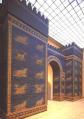

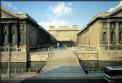
After we finished up our program for this summer on Thursday evening, August 11, my sister, Tina, and I did a little Euro-touristing before my return to Texas on August 24. We spent the weekend in Berlin, as I've said many times this summer, my lieblings Stadt in Germany. We trooped out to Museum Insel and visited the magnificent Pergamom Museum, the Jewel in the Crown of Berlin museums and home of the fairly incredible Pergamon Altar. Looted (well excavated) by German archaeologists during the Golden Age of imperialist archeology, the Pergamon Altar is an enormous marble structure with a huge, marble frieze depicting the epic struggle between the Olympian Gods and the Giants. Breathtaking really.
Just down the corridor from the Pergamom Altar is breathtaking artifact #2, the Ishtar Gate. Discovered and excavated in what is now Iraq, this Babylonian structure is an enormous gateway made of blur-glazed brick that once formed an end of a huge processional thoroughfare. The gate is decorated with images of lions and other animals also of glazed brick. As is typical for German museums, there was an overdose of information available describing the Gate and providing details of its restoration. Apparently the original installation of the Gate in the early part of the 20th century involved some dodgy decisions and there is now a risk of pieces plummeting off the top and squashing visitors!
I had been in the Pergamon twice before back in the early 1990s but it was as awesome for me this time as the first time--just an incredible place and incredible artifacts.
Monday morning saw Tina and I off to Bahnhof Zoo to catch our train to Copenhagen. I'll continue this account in Road Trip post #2!
Subscribe to:
Posts (Atom)